To Everna and Beyond!

An exploration of Fantasy and Science Fiction Worlds in literature and multimedia entertainment
The official blog and novelblog for Evernade Saga and FireHeart Saga by Andry Chang

"Come forth, Paladins! Fulfill your destiny!"

Explore Worlds in Clicks

FireHeart Highlights!

Showing posts with label research. Show all posts

Saturday, July 24, 2010

Cuchulainn

Cúchulainn
http://encyclopedia.thefreedictionary.com/Cuchulainn

"Cuchulain Slays the Hound of Culain", illustration by Stephen Reid from Eleanor Hull's The Boys' Cuchulain, 1904Enlarge picture
"Cuchulain Slays the Hound of Culain", illustration by Stephen Reid from Eleanor Hull's The Boys' Cuchulain, 1904

Cúchulainn /kuːˈxʊlɪnʲ/ ( ) (Irish "Hound of Culann"; also spelled Cú Chulainn, Cú Chulaind, Cúchulain, or Cuchullain) is an Irish mythological hero who appears in the stories of the Ulster Cycle, as well as in Scottish and Manx folklore. The son of the god Lugh and Deichtine, sister of the king of Ulster, he was originally named Sétanta /'ʃeːd̪ˠɔn̪ˠd̪ˠə/ , but gained his better-known name as a child after he killed Culann's fierce guard-dog in self-defence, and offered to take its place until a replacement could be reared. At the age of seventeen he defended Ulster single-handedly against the armies of queen Medb of Connacht in the epic Táin Bó Cúailnge ("The Cattle Raid of Cooley"). It was prophesied that his great deeds would give him everlasting fame, but that his life would be short – one reason he is compared to the Greek hero Achilles. He is known for his terrifying battle frenzy or ríastrad,[1] in which he becomes an unrecognisable monster who knows neither friend nor foe. He fights from his chariot, driven by his loyal charioteer Láeg, and drawn by his horses, Liath Macha and Dub Sainglend.

Legends

Birth

There are a number of versions of the story of Cúchulainn's birth. In an early version, his mother Deichtine is the daughter and charioteer of Conchobar mac Nessa, king of Ulster, and accompanies him as he and the nobles of Ulster hunt a flock of magical birds. Snow falls, and the Ulstermen seek shelter, finding a house where they are made welcome. Their host's wife goes into labour, and Deichtine assists at the birth of a baby boy. A mare gives birth to two colts at the same time. The next morning, the Ulstermen find themselves at the Brug na Bóinde (the neolithic mound at Newgrange) – the house and its occupants have disappeared, but the child and the colts remain. Deichtine takes the boy home and raises him to early childhood, but he falls sick and dies. The god Lugh appears to her and tells her he was their host that night, and that he has put his child in her womb, who is to be called Sétanta. Her pregnancy is a scandal as she is betrothed to Sualtam mac Róich, and the Ulstermen suspect Conchobar of being the father, so she aborts the child and goes to her husband's bed "virgin-whole". She then conceives a son whom she names Sétanta.[2] This has been interpreted as a triple conception, marking the child out as someone special.[3]

In a later, and better-known, version, Deichtine is Conchobar's sister, and disappears from Emain Macha, the Ulster capital. As in the previous version, the Ulstermen go hunting a flock of magical birds, are overtaken by a snowstorm and seek shelter in a nearby house. Their host is Lugh, but this time his wife, who gives birth to a son that night, is Deichtine herself. The child is named Sétanta.[4] The nobles of Ulster argue over which of them is to be his foster-father, until the wise Morann decides he should be fostered by several of them: Conchobar himself; Sencha mac Ailella, who will teach him judgement and eloquent speech; the wealthy Blaí Briugu, who will protect and provide for him; the noble warrior Fergus mac Róich, who will care for him and teach him to protect the weak; the poet Amergin, who will educate him, and his wife Findchóem, who will nurse him. He is brought up in the house of Amergin and Findchóem on Muirthemne Plain in modern County Louth, alongside their son Conall Cernach.[5]

Childhood

The stories of Cúchulainn's childhood are told in a flashback sequence in Táin Bó Cúailnge. As a small child, living in his parent's house on Muirthemne Plain, he begs to be allowed to join the boy-troop at Emain Macha, but his mother thinks he is too young and should wait for a company of warriors to take him there. However, he sets off on his own, and when he arrives at Emain he runs onto the playing field without first asking for the boys' protection, being unaware of the custom. The boys take this as a challenge and attack him, but he has a ríastrad and beats them single-handed. Conchobar puts a stop to the fight and clears up the misunderstanding, but no sooner has Sétanta put himself under the boys' protection than he chases after them, demanding they put themselves under his protection.[6]

Culann the smith invites Conchobar to a feast at his house. Before going, Conchobar goes to the playing field to watch the boys play hurling. He is so impressed by Sétanta's performance that he asks him to join him at the feast. Sétanta has a game to finish, but promises to follow the king later. But Conchobar forgets, and Culann lets loose his ferocious guard dog to protect his house. When Sétanta arrives, the enormous dog attacks him, but he kills it in self-defence, in one version by smashing it against a standing stone, in another by driving a sliotar (hurling ball) down its throat with his hurley. Culann is devastated by the loss of his dog, so Sétanta promises he will rear him a replacement, and until it is old enough to do the job, he himself will guard Culann's house. The druid Cathbad announces that his name henceforth will be Cú Chulainn – "Culann's Hound".[7]

One day at Emain Macha, Cúchulainn overhears Cathbad teaching his pupils. One asks him what that day is auspicious for, and Cathbad replies that any warrior who takes arms that day will have everlasting fame. Cúchulainn, though only seven years old, goes to Conchobar and asks for arms. None of the weapons given to him withstand his strength, until Conchobar gives him his own weapons. But when Cathbad sees this he grieves, because he had not finished his prophesy – the warrior who took arms that day would be famous, but his life would be short. Soon afterwards, in response to a similar prophesy by Cathbad, Cúchulainn demands a chariot from Conchobar, and only the king's own chariot withstands him. He sets off on a foray and kills the three sons of Nechtan Scéne, who had boasted they had killed more Ulstermen than there were Ulstermen still living. He returns to Emain Macha in his battle frenzy, and the Ulstermen are afraid he will slaughter them all. Conchobar's wife Mugain leads out the women of Emain, and they bare their breasts to him. He averts his eyes, and the Ulstermen wrestle him into a barrel of cold water, which explodes from the heat of his body. They put him in a second barrel, which boils, and a third, which warms to a pleasant temperature.[8]

Emer and Cúchulainn's training


In Cúchulainn's youth he is so beautiful the Ulstermen worry that, without a wife of his own, he will steal their wives and ruin their daughters. They search all over Ireland for a suitable wife for him, but he will have none but Emer, daughter of Forgall Monach. However, Forgall is opposed to the match. He suggests that Cúchulainn should train in arms with the renowned warrior-woman Scáthach in the land of Alba (Scotland), hoping the ordeal will be too much for him and he will be killed. Cúchulainn takes up the challenge. In the meantime, Forgall offers Emer to Lugaid mac Nóis, a king of Munster, but when he hears that Emer loves Cúchulainn, Lugaid refuses her hand.

Scáthach teaches Cúchulainn all the arts of war, including the use of the Gáe Bulg, a terrible barbed spear, thrown with the foot, that has to be cut out of its victim. His fellow trainees include Ferdiad, who becomes Cúchulainn's best friend and foster-brother. During his time there, Scáthach faces a battle against Aífe, her rival and in some versions her twin sister. Scáthach, knowing Aífe's prowess, fears for Cúchulainn's life and gives him a powerful sleeping potion to keep him from the battle. However, because of Cúchulainn's great strength, it only puts him to sleep for an hour, and he soon joins the fray. He fights Aífe in single combat, and the two are evenly matched, but Cúchulainn distracts her by calling out that Aífe's horses and chariot, the things she values most in the world, have fallen off a cliff, and seizes her. He spares her life on the condition that she call off her enmity with Scáthach, and bear him a son.

Leaving Aífe pregnant, Cúchulainn returns from Scotland fully trained, but Forgall still refuses to let him marry Emer. Cúchulainn storms Forgall's fortress, killing twenty-four of Forgall's men, abducts Emer and steals Forgall's treasure. Forgall himself falls from the ramparts to his death. Conchobar has the "right of the first night" over all marriages of his subjects. He is afraid of Cúchulainn's reaction if he exercises it in this case, but is equally afraid of losing his authority if he does not. Cathbad suggests a solution: Conchobar sleeps with Emer on the night of the wedding, but Cathbad sleeps between them.[9]

Cúchulainn kills his son

Seven years later, Connla, Cúchulainn's son by Aífe, comes to Ireland in search of his father, but Cúchulainn takes him as an intruder and kills him when he refuses to identify himself.[10] The story of Cúchulainn and Connla shows a striking similarity to the legend of Persian hero Rostam who also kills his son Sohrab. Rostam and Cúchulainn share several other characteristics, including killing a ferocious beast at a very young age, their near invincibility in battle, and the manner of their deaths.

Lugaid and Derbforgaill

During his time abroad, Cúchulainn had rescued Derbforgaill, a Scandinavian princess, from being sacrificed to the Fomorians. She falls in love with him, and she and her handmaid come to Ireland in search of him in the form of a pair of swans. Cúchulainn, not realising who she is, shoots her down with his sling, and then saves her life by sucking the stone from her side. Having tasted her blood, he cannot marry her, and gives her to his foster-son Lugaid Riab nDerg. Lugaid goes on to become High King of Ireland, but the Lia Fáil (stone of destiny), fails to cry out when he stands on it, so Cúchulainn splits it in two with his sword.[11] When Derbforgaill is mutilated by the women of Ulster out of jealousy for her sexual desirability and dies of her wounds, Lugaid dies of grief, and Cúchulainn avenges them by demolishing the house the women are inside, killing 150 of them.[12]

The Cattle Raid of Cooley


At the age of seventeen, Cúchulainn single-handedly defends Ulster from the army of Connacht in the Táin Bó Cúailnge. Medb, queen of Connacht, has mounted the invasion to steal the stud bull Donn Cúailnge, and Cúchulainn allows her to take Ulster by surprise because he is with a woman when he should be watching the border. The men of Ulster are disabled by a curse, so Cúchulainn prevents Medb's army from advancing further by invoking the right of single combat at fords. He defeats champion after champion in a stand-off lasting months.

Before one combat a beautiful young woman comes to him, claiming to be the daughter of a king, and offers him her love, but he refuses her. The woman reveals herself as the Morrígan, and in revenge for this slight she attacks him in various animal forms while he is engaged in combat against Lóch mac Mofemis. As an eel, she trips him in the ford, but he breaks her ribs. As a wolf, she stampedes cattle across the ford, but he puts out her eye with a sling-stone. Finally she appears as a heifer at the head of the stampede, but he breaks her leg with another slingstone. After Cúchulainn finally defeats Lóch, the Morrígan appears to him as an old woman milking a cow, with the same injuries he had given her in her animal forms. She gives him three drinks of milk, and with each drink he blesses her, healing her wounds.

After one particularly arduous combat Cúchulainn lies severely wounded, but is visited by Lugh, who tells him he is his father and heals his wounds. When Cúchulainn wakes up and sees that the boy-troop of Emain Macha have attacked the Connacht army and been slaughtered, he has his most spectacular ríastrad yet:

The first warp-spasm seized Cúchulainn, and made him into a monstrous thing, hideous and shapeless, unheard of. His shanks and his joints, every knuckle and angle and organ from head to foot, shook like a tree in the flood or a reed in the stream. His body made a furious twist inside his skin, so that his feet and shins switched to the rear and his heels and calves switched to the front... On his head the temple-sinews stretched to the nape of his neck, each mighty, immense, measureless knob as big as the head of a month-old child... he sucked one eye so deep into his head that a wild crane couldn't probe it onto his cheek out of the depths of his skull; the other eye fell out along his cheek. His mouth weirdly distorted: his cheek peeled back from his jaws until the gullet appeared, his lungs and his liver flapped in his mouth and throat, his lower jaw struck the upper a lion-killing blow, and fiery flakes large as a ram's fleece reached his mouth from his throat... The hair of his head twisted like the tange of a red thornbush stuck in a gap; if a royal apple tree with all its kingly fruit were shaken above him, scarce an apple would reach the ground but each would be spiked on a bristle of his hair as it stood up on his scalp with rage.

Thomas Kinsella (translator), The Táin, Oxford University Press, 1969, pp. 150-153

He attacks the army and kills hundreds, building walls of corpses.

When his foster-father Fergus mac Róich, now in exile in Medb's court, is sent to face him Cúchulainn agrees to yield, so long as Fergus agrees to return the favour the next time they meet. Finally, he fights a gruelling three-day duel with his best friend and foster-brother, Ferdiad, at a ford that was named Áth Fhir Diadh (Ardee, County Louth) after him.

The Ulstermen eventually rouse, one by one at first, and finally en masse. The final battle begins. Cúchulainn stays on the sidelines, recuperating from his wounds, until he sees Fergus advancing. He enters the fray and confronts Fergus, who keeps his side of the bargain and yields to him, pulling his forces off the field. Connacht's other allies panic and Medb is forced to retreat. At this inopportune moment she gets her period, and although Fergus forms a guard around her, Cúchulainn breaks through as she is dealing with it and has her at his mercy. However he spares her because he does not think it right to kill women, and guards her retreat back to Connacht as far as Athlone.[13]

Bricriu's Feast


The troublemaker Bricriu once incites three heroes, Cúchulainn, Conall Cernach and Lóegaire Búadach, to compete for the champion's portion at his feast. In every test that is set Cúchulainn comes out top, but neither Conall nor Lóegaire will accept the result. Cú Roí mac Dáire of Munster settles it by visiting each in the guise of a hideous churl and challenging them to behead him, then allow him to return and behead them in return. Conall and Lóegaire both behead Cú Roí, who picks up his head and leaves, but when the time comes for him to return they flee. Only Cúchulainn is brave and honourable enough to submit himself to Cú Roí's axe; Cú Roí spares him and he is declared champion.[14] This beheading challenge appears in later literature, most notably in the Middle English poem Sir Gawain and the Green Knight. Other examples include the 13th century French Life of Caradoc and the English romances The Turke and Gowin, and The Carle off Carlile.

The Death of Cú Roí

Cú Roí, again in disguise, joins the Ulstermen on a raid on Inis Fer Falga (probably the Isle of Man), in return for his choice of the spoils. They steal treasure, and abduct Blathnát, daughter of the island's king, who loves Cúchulainn. But when Cú Roí is asked to choose his share, he chooses Blathnát. Cúchulainn tries to stop him taking her, but Cú Roí cuts his hair and drives him into the ground up to his armpits before escaping, taking Blathnát with him. Like other heroes such as the Biblical Samson, Duryodhana in the Mahabharata and the Welsh Llew Llaw Gyffes, Cú Roí can only be killed in certain contrived circumstances, which vary in different versions of the story. Blathnat discovers how to kill him and betrayes him to Cúchulainn, who does the deed. However Ferchertne, Cú Roí's poet, enraged at the betrayal of his lord, grabs Blathnát and leaps off a cliff, killing her and himself.[15]

Emer's only jealousy

Cúchulainn rebuked by Emer (1905 illustration by H. R. Millar)Enlarge picture
Cúchulainn rebuked by Emer (1905 illustration by H. R. Millar)

Cúchulainn has many lovers, but Emer's only jealousy comes when he falls in love with Fand, wife of Manannán mac Lir. Manannán has left her and she has been attacked by three Fomorians who want to control the Irish Sea. Cúchulainn agrees to help defend her as long as she marries him. She agrees reluctantly, but they fall in love when they met. Manannán knows their relationship is doomed because Cúchulainn is mortal and Fand is a fairy; Cúchulainn's presence would destroy the fairies. Emer, meanwhile, tries to kill her rival, but when she sees the strength of Fand's love for Cúchulainn she decides to give him up to her. Fand, touched by Emer's magnanimity, decides to return to her own husband. Manannan shakes his cloak between Cúchulainn and Fand, ensuring the two will never meet again, and Cúchulainn and Emer drink a potion to wipe the whole affair from their memories.[16]

Cúchulainn's death

The figure of Cúchulainn was used to commommorate the Easter Rising on the ten shilling coinEnlarge picture
The figure of Cúchulainn was used to commommorate the Easter Rising on the ten shilling coin

Medb conspires with Lugaid, son of Cú Roí, Erc, son of Cairbre Nia Fer, and the sons of others Cúchulainn had killed, to draw him out to his death. His fate is sealed by his breaking of the geasa (taboos) upon him. Cúchulainn's geasa included a ban against eating dog meat, but in early Ireland there was a powerful general taboo against refusing hospitality, so when an old crone offers him a meal of dog meat, he has no choice to break his geis. In this way he is spiritually weakened for the fight ahead of him.

Lugaid has three magical spears made, and it is prophesied that a king will fall by each of them. With the first he kills Cúchulainn's charioteer Láeg, king of chariot drivers. With the second he kills Cúchulainn's horse, Liath Macha, king of horses. With the third he hits Cúchulainn, mortally wounding him. Cúchulainn ties himself to a standing stone in order to remain standing. This stone is traditionally identified as one still standing at Knockbridge, County Louth.[17] Only when a raven lands on his shoulder do his enemies believe he is dead. Lugaid cuts off his head, but as he does so Cúchulainn's sword falls from his hand and cuts Lugaid's hand off.

Conall Cernach had sworn that if Cúchulainn died before him he would avenge him before sunset, and when he hears Cúchulainn is dead he pursues Lugaid. As Lugaid has lost a hand, Conall fights him with one hand tucked into his belt, but he only beats him after his horse takes a bite out of Lugaid's side. He also kills Erc, and takes his head back to Tara, where his sister Achall dies of grief for her brother.[18]

Later stories

The story is told that when Saint Patrick was trying to convert king Lóegaire to Christianity, the ghost of Cúchulainn appeared in his chariot, warning him of the torments of hell.[19]

Appearance

Cúchulainn's appearance is occasionally remarked on in the texts. He is usually described as small, youthful and beardless. He is often described as dark: in The Wooing of Emer and Bricriu's Feast he is "a dark, sad man, comeliest of the men of Erin",[20] in The Intoxication of the Ulstermen he is a "little, black-browed man",[21] and in The Phantom Chariot of Cú Chulainn "[h]is hair was thick and black, and smooth as though a cow had licked it... in his head his eyes gleamed swift and grey";[22] yet the prophetess Fedelm in the Táin Bó Cúailnge describes him as blond.[23] The most elaborate description of his appearance comes later in the Táin:

And certainly the youth Cúchulainn mac Sualdaim was handsome as he came to show his form to the armies. You would think he had three distinct heads of hair – brown at the base, blood-red in the middle, and a crown of golden yellow. This hair was settled strikingly into three coils on the cleft at the back of his head. Each long loose-flowing strand hung down in shining splendour over his shoulders, deep-gold and beautiful and fine as a thread of gold. A hundred neat red-gold curls shone darkly on his neck, and his head was covered with a hundred crimson threads matted with gems. He had four dimples in each cheek – yellow, green, crimson and blue – and seven bright pupils, eye-jewels, in each kingly eye. Each foot had seven toes and each hand seven fingers, the nails with the grip of a hawk's claw or a gryphon's clench.

—Thomas Kinsella (translator), The Táin, Oxford University Press, 1969, pp. 156-158

Monday, February 08, 2010

Medieval Armour - Wikipedia Directory

Hauberk

Hauberk

From Wikipedia, the free encyclopedia

Jump to: navigation, search
Hauberk, Museum of Bayeux.

A hauberk is a shirt of mail armour. The term is usually used to describe a shirt reaching at least to mid-thigh and including sleeves. Haubergeon ("little hauberk") generally refers to a shorter variant with partial sleeves, but the terms are often used interchangeably.[1] Slits to accommodate horseback-riding are often incorporated below the waist. Most are put on over the head. Hauberk can also refer to a similar garment of scale armour.

[edit] History

Transylvanian parade hauberk of King John II Casimir, 17th century

The word hauberk is derived from an old German word Halsberge, which originally described a small piece of mail that protects the throat and the neck (the 'Hals'). The Roman author Varro attributes the invention of mail to the Celts. The earliest extant example was found in Ciumeşti in modern Romania and is dated to the 4th-5th centuries BC. Roman armies adopted similar technology after encountering it. Mail armour spread throughout the Mediterranean Basin with the expansion of the Romans and was quickly adopted by virtually every iron-using culture in the world, with the exception of the Chinese, who used it rarely despite being heavily exposed to it from other cultures.

The short-hemmed, short-sleeved hauberk may have originated from the medieval Islamic world.[1] The Bayeux Tapestry illustrates Norman soldiers wearing a knee-length version of the hauberk, with three-quarter length sleeves and a split from hem to crotch. Such armor was quite expensive — both in materials (iron wire) and time/skill required to manufacture it — so common foot soldiers rarely were so equipped.

The hauberk stored in the Prague Cathedral, dating from the 12th century, is one of the earliest surviving examples from Central Europe and was supposedly owned by Saint Wenceslaus. In Europe, use of mail hauberks continued up through the 14th century, when plate armor began to supplant it. In parts of Central Asia, it continued to be used longer.

[edit] Construction

The hauberk is typically a type of mail armour which is constructed of loops of metal woven into a tunic or shirt. The sleeves sometimes only went to the elbow, but often were full arm length, with some covering the hands with a supple glove leather face on the palm of the hand, or even full mail gloves. It was usually thigh or knee length, with a split in the front and back to the crotch so the wearer could ride a horse. It sometimes incorporated a hood, or coif.

[edit] References

^ David Nicolle (1994), Saracen faris 1050-1250 A.D., Osprey Publishing, p. 58, ISBN 1855324539

Source:
http://en.wikipedia.org/wiki/Hauberk

Friday, December 04, 2009

Magi

Disclaimer: This is to determine the origin of the term "Magi" used in fantasy stories.
Please refer to the source for more information.
http://www.farsinet.com/wisemen/magi.html

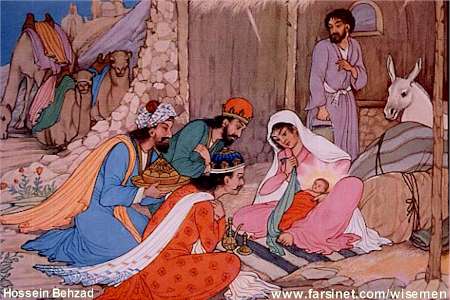
Magi (Majusian)

Three Wise Men From Iran Visited Jesus From old Persian language, a priest of Zarathustra (Zoroaster). The Bible gives us the direction, East and the legend states that the wise men were from Persia (Iran) - Balthasar, Melchior, Caspar - thus being priests of Zarathustra religion, the mages. Obviously the pilgrimage had some religious significance for these men, otherwise they would not have taken the trouble and risk of travelling so far. But what was it? An astrological phenomenon, the Star?
  • Matthew 2:1 - "After Jesus was born in Bethlehem in Judea, during the time of King Herod, Magi [*] from the east came to Jerusalem." (* Footnote: Traditionally Wise Men). Matthew 2:7 - Then Herod called the Magi secretly and found out from them the exact time the star had appeared. Matthew 2:16 - When Herod realized that he had been outwitted by the Magi, he was furious, and he gave orders to kill all the boys in Bethlehem and its vicinity who were two years old and under, in accordance with the time he had learned from the Magi.
  • Church of Nativity in Bethlehem, was erected in 329 by Queen Helena in the area it was believed to be where Jesus was born. In 614, The Church was saved from destruction by the Persian rampage because of the mosaic of the Magi dressed in Persian Garb on the floor of this church.
  • Magi, priestly caste in ancient Persia. They are thought to have been followers of Zoroaster, the Persian teacher and prophet, and they professed the doctrines of Zoroastrianism. By the 1st century AD, the magi were identified with wise men and soothsayers. Encarta Concise Encyclopedia - Religion & Philosophy.
  • Information on the church converted from a temple by the wise man in Urumia

    To whom it may concern,

    Salam. I am a Bangladeshi doctor who worked in Iran under Ministry of Health from 1985 to 94. During my stay in Iran I travelled many areas-having archeological importance. The ancient churches of Iran was also included in my interest. Once on the way to the Ghara Kilisha I was in Urumia. In the city I had a chance of visiting one church. I have forgetten the name of the chuch but the thing which I still remember that there were two chuches in the same compound, One was recent made and the ancient one was under the ground. May be this was an assurian church. I was told by a local person that the ancient structure was not a church, rather it was a Zorostrian temple. One of the 3 wisemen who visited new born Jesus was a Zorostrian Priest who after the crucifixation started practising Christianity & converted the temple to the christian church. At that time videography was mamnoo in Iran so I could not do any videography.

    I am interested to know more regarding the church and want to verify from your organization about the authenticity whatever I was told. Please let me know about your opinion. Please do reply.

    Dr. N. D. R. - worked in Kerman Province

    If you have any information in this regard to share with Dr. R. please send to webmaster@farsinet.com

    The Holy Epiphany - by Lwis Williams
    While oftentimes conflicting lore muddles the story of the Magi, those bearing gifts for the Christ child are Caspar of Tarsus, Melchior of Persian and Balthasar of Saba. Weary from desert travel, the Magi humbly offer their gifts. Caspar is young, European and offers gold. Gold finances the Holy Family's coming flight to Egypt and also symbolizes Christ's immortality and purity. For his generosity, Caspar receives the gifts of charity and spiritual wealth. Melchior is middle-aged, Persian and offers myrrh. Myrrh is a fragrant gum, which the ancient Israelites believed to strengthen children. This symbol of Christ's mortality was blended with wine and offered to him on the cross, and also mixed with aloes to wrap his body for the tomb. Melchior receives the gifts of humility and truth. Balthasar is elderly, Ethiopian and offers frankincense. Frankincense is a resin used in incense for worship and also symbolizes prayer and sacrifice. Balthasar receives the gift of Faith. And Christ, humbling himself to become man, offers us the greatest gift of all, the light that forever burns in the darkness.

    Portrate of 3 Wise men in a Church in Iran

  • Wise Men of the East, also called Magi, or Three Kings of the Orient. In Matthew, noble pilgrims followed a star to Israel to pay homage to the newborn Christ Child (See Pilgrim). They asked King Herod the Great for assistance in finding the child. Herod could not help them but asked the men to return with news of the child. Warned in a dream, they did not return to Herod. Encarta Concise Encyclopedia - Religion & Philosophy. Three Wise Men From Iran Visited Jesus
  • "In Search of the Birth of Jesus, the Real Journey of the Magi"
    A Pilgrimage from Ancient Persian to Modern Bethlehem with Paul William Roberts
    Esfahan -> Saveh -> Damascus -> Jerusalem -> Bethlehem
    Roberts has woven the journey of the Magi with a comtemporary journey overland - by car and camel - from Iran to Bethlehem and has gathered up some intriguing information on the development of our civilization and our belief systems.

The Magi, revisited
Another translation of Marco Polo's classic

By H. Behzadi
May 28, 2002
The Iranian
Religion did not play a big part in my upbringing in Iran. What little I know comes from those interminable compulsory Religious Study classes at high school in Tehran which as I recollect were either run by clerics or Literature teachers looking for extra income. The Persian Literature teachers never took it that seriously and as long as you remembered the main tenets and could basically write. You were assured of getting through with a reasonable grade.

We (or at least I) could never understand what the clerics were on about, as they seemed to speak in a foreign language. Those who have read Jamalzadeh's short but very witty ingenuous piece "Farsi Shekar Ast" ("Persian Is Nectar") will know what I mean. They seemed to pride themselves into making the subject at hand totally uninteresting and arcane. And to a child they were dangerous as they were liable to fail you in "Feqh". IMagine the risk of losing those beautiful summers having to study for a Religious Studies re-sit.

I know even less about Christianity and it wasn't till my daughter started school run by the local church in the suburbs of London, chosen mainly for its proximity and better reputation that I had any proper exposure to it. Don't worry! This is not an attempt to convert you. The religious schools in England are very popular with the immigrant communities, non-religious and even non-believers.

They are chosen solely because of their reputation for better discipline, smaller class sizes and higher standard of learning. In some ways it shows up something of the double standard by these groups and I have often wondered why the school organisers tolerate it. Some Catholic schools now insist on at least one parent being Catholic and the local priest confirming regular worship before acceptance.

One of the stories the kids become familiar with from an early age is the story of three Magi (or the three Kings) who foresaw the birth of Christ and went on a pilgrimage to see the newly born baby Jesus. My mother, god bless her soul, was kind of funky with a surreal aspect to her character. She had a habit of sometimes dropping and boring you (that is how it seemed to me then) with "pearls of wisdom" either totally unrelated to the subject of conversation or what you were up to at the time (like trying to find an excuse to get out of the house to play football in the street or to spy on the girls in the neighbourhood).

The funny thing was that she never liked anyone else doing the same to her and if she was concentrating, say reading a good book, the only response you could ever get would be a 'hmmm'. You could shout and scream about the house being on fire but if she was reading a particularly good novel, 'hmmmm' meaning: "don't bother me kid; let whatever is happening, happen without me."

Just after my mother moved to England I have a vague recollection of her dropping one of these pearls of wisdom without any solicitation on my part about the three Magi, according to her the the three Magi must have been Iranian as Magi must be the same as "mogh" in Persian meaning Zoroastrian priests, being young and not interested in these matters I never really paid attention.

I recently read "The Travels" of Marco Polo translated by Ronald Latham for Penguin Classics and the first story Marco Polo relates about Persia proper is about the three Magi. The Iranian published an excerpt from another translation in 1997 but I prefer the Penguin version as it is a better translation and Ronald Latham has used modern names where it has been possible to make a match. Thanks to the Internet I also found the story as it appears in the Bible in the Testament of Matthew.

Marco Polo's version relates the version of the story prevalent in Iran in the middle of the 12th century with specific references to places in Iran making it very interesting reading. I also looked up Magi in the dictionary and learnt that it is indeed plural for magus, meaning "a: a member of a hereditary priestly class among the ancient Medes and Persians; b often capitalized : one of the traditionally three wise men from the East paying homage to the infant."

Here is the Ronald Latham translation:

In Persia is the city called Saveh, from which the three Magi set out when they came to worship Jesus Christ. Here, too, they lie buried in three sepulchres of great size and beauty. Above each sepulchre is a square building with a domed roof of very fine workmanship. The one is just beside the other. Their bodies are still whole, and they have hair and beards. One was named Beltasar, the second Gaspar, and the third Melchior.

Messer Marco asked several of the inhabitants who these Magi were; but no one could tell him anything except that they were three kings who were buried there in days gone by. But at last he learnt What I will tell you.

Three days farther on, he found a town called Kala Atashparastan, that is to say Town of the Fire-worshippers. And that is no more than the truth; for the men of this town do worship fire. And I will tell you why they worship it. The inhabitants declare that in days gone by three kings of this country went to worship a new-born prophet and took with them three offerings -gold, frankincense, and myrrh - so as to discover whether this prophet was a god, or an earthly king or a healer. For they said : 'If he takes gold, he is an earthly king; if frankincense, a god; if myrrh, a healer.'

When they had come to the place where the prophet was born, the youngest of the three kings went in all alone to see the child. He found that he was like himself, for he seemed to be of his own age and appearance. And he came out, full of wonder. Then in went the second, who was a man of middle age. And to him also the child seemed, as it had seemed to the other, to be of his own age and appearance. And he came out quite dumbfounded. Then in went the third, who was of riper years; and to him also it happened as it had to the other two. And he came out deep in thought. When the three kings were all together, each told the others what he had seen. And they were much amazed and resolved that they would all go in together.

So, in they went, all three together, and came before the child and saw him in his real likeness and of his real age; for he was only thirteen days old. Then they worshipped him and offered him the gold, the frankincense, and the myrrh. The child took all three offerings and then gave them a closed casket. And the three kings set out to return to their own country.

After they had ridden for some days, they resolved to see what the child had given them. They opened the casket and found inside it a stone. They wondered greatly what this could be. The child had given it to them to signify that they should be firm as stone in the faith that they had adopted. For, when the three kings saw that the child had taken all three offerings, they concluded that he was at once a god, and an earthly king, and a healer. And, since the child knew that the three kings believed this, he gave them the stone to signify that they should be firm and constant in their belief.

The three kings, not knowing why the stone had been given to them, took it and threw it into a well. No sooner had it fallen in than there descended from heaven a burning fire, which came straight to the well into which it had been thrown. When the three kings saw this miracle, they were taken aback and repented of their throwing away the stone; for they saw clearly that its significance was great and good. They immediately took some of this fire and carried it to their country and put it in one of their churches, a very fine and splendid building.

They keep it perpetually burning and worship it as a god. And every sacrifice and burnt offering which they make is roasted with this fire. If it ever happens that the fire goes out, they go round to others who hold the same faith and worship fire also and are given some of the fire that burns in their church. This they bring back to rekindle their own fire. They never rekindle it except with this fire of which I have spoken. To procure this fire, they often make a journey of ten days.

That is how it comes about that the people of this country are fire worshippers. And I assure you that they are very numerous. All this was related to Messer Marco Polo by the inhabitants of this town; and it is all perfectly true. Let me tell you finally that one of the three Magi came from Saveh, one from Hawah, and the third from Kashan.


Christ and the Persian magi
Marco Polo on Persia's "Christian" fire worshippers

From Chapter XI (Of the province of Persia) of Marco Polo's "The Travels; The Description of the world" written in 1298. This translation is by William Marsden, revised by Thomas Wright (Konemann Travel Classics, Koln, Germany, 1996).

Persia was anciently a large and noble province, but it is now in great part destroyed by the Tartars. In Persia there is a city which is called Saba, from whence were the three magi who came to adore Christ in Bethlehem; and the three are buried in that city in a fair sepulchre, and they are all three entire with their beards and hair. One was called Baldasar, the second Gaspar, and the third Melchior.

Marco inquired often in that city concerning the three magi, and nobody could tell him anything about them, except that the three magi were buried there in ancient times. After three days' journey you come to a castle which is called Palasata, which means the castle of the fire-worshippers, and it is true that the inhabitants of that castle worship fire, and this is given as the reason.

The men of that castle say, that anciently three kings of that country went to adore a certain king who was newly born, and carried with them three offerings, namely, gold, frankincense, and myrth: gold, that they might know if he were an earthly king; frankincense, that they might know if he were God; and myrth, that they might now if he were a mortal man.

When these magi were presented to Christ, the youngest of the three adored him first, and it appeared to him that Christ was of his stature and age. The middle one came next, and then the eldest, and to each he seemed to be of their own stature and age. Having compared their observations together, they agreed to go all to worship at once, and then he appeared to them all of his true age.

When they went away, the infant gave them a closed box, which they carried with them for several days, and then becoming curious to see what he had given them, they opened the box and found in it a stone, which was intended for a sign that they should remain firm as a stone in the faith they had received from him.

When, however, they saw the stone, they marvelled, and thinking themselves deluded, they threw the stone into a certain pit, and instantly fire burst forth in the pit. When they saw this, they repented bitterly of what they had done, and taking some of the fire with them they carried it home.

And having placed it in one of their churches, they keep it continually burning, and adore that fire as a god, and make all their sacrifices with it; and if it happen to be extinguished, they go for more to the original fire in the pit where they threw the stone, which is never extinguished, and they take of none other fire. And, therefore, the people of the country worship fire.

Marco was told all this by the people of the country; and it is true that one of those kings was of Saba; and the second was Dyava, and the third was of the castle.

Please send your comments and suggestions to webmaster@farsinet.com
Copyright © 1996-2009 FarsiNet Inc. All Rights Reserved. (100198 472687 )

Thursday, September 24, 2009

HMS Victory in Battle of Trafalgar


**Please watch in HQ**

3D cinematic recreation of the HMS Victory breaking the line at the Battle of Trafalgar between Napoleon's Navy vs. England under Admiral Horatio Nelson.

Produced for the documentary "TRAFALGAR" from K2
http://k2films.com/trafalgar/battlejoined.html

Animatics and test renders:
http://www.youtube.com/watch?v=JqnANzzHcLE&feature=related

Software used: Maya, Blastcode, RealFlow, After Effects, Photoshop

Source:
http://www.youtube.com/watch?v=jcRCQ8mhVNE

Sunday, August 02, 2009

Nidhogg

Níðhöggr

From Wikipedia, the free encyclopedia

Legendary Dragons - Norse Mythology
Source: http://en.wikipedia.org/wiki/Nidhogg


(Redirected from Nidhogg)
Jump to: navigation, search
Níðhöggr or Nydhogg Nagar gnaws the roots of Yggdrasill in this illustration from a 17th century Icelandic manuscript.

In Norse mythology, Níðhöggr (Malice Striker, often anglicized Nidhogg[1]) is a dragon who eats the roots of the World Tree, Yggdrasill.

Contents

[edit] Prose Edda

According to the Gylfaginning part of Snorri Sturluson's Prose Edda, Níðhöggr or "Nidhogg Nagar" is a being which gnaws one of the three roots of Yggdrasill. This root is placed over Niflheimr and Níðhöggr gnaws it from beneath. The same source also says that "[t]he squirrel called Ratatöskr runs up and down the length of the Ash, bearing envious words between the eagle and Nídhöggr."[2]

In the Skáldskaparmál section of the Prose Edda Snorri specifies Níðhöggr as a serpent in a list of names of such creatures:

These are names for serpents: dragon, Fafnir, Iormungand, adder, Nidhogg, snake, viper, Goin, Moin, Grafvitnir, Grabak, Ofnir, Svafnir, masked one. (Faulkes translation, p.137)

Snorri's knowledge of Níðhöggr seems to come from two of the Eddic poems: Grímnismál and Völuspá.

Later in Skáldskaparmál, Snorri includes Níðhöggr in a list of various terms and names for swords.[3]

[edit] Poetic Edda

The poem Grímnismál identifies a number of beings which live in Yggdrasill. The tree suffers great hardship from all the creatures which live on it. The poem identifies Níðhöggr as tearing at the tree from beneath and also mentions Ratatoskr as carrying messages between Níðhöggr and the eagle who lives at the top of the tree. Snorri Sturluson often quotes Grímnismál and clearly used it as his source for this information.

The poem Völuspá mentions Níðhöggr twice. The first instance is in its description of Náströnd.

Eysteinn Björnsson's edition Thorpe's translation Dronke's translation
Sal sá hon standa
sólu fjarri
Náströndu á,
norðr horfa dyrr.
Fellu eitrdropar
inn um ljóra,
sá er undinn salr
orma hryggjum.
Sá hon þar vaða
þunga strauma
menn meinsvara
ok morðvarga
ok þanns annars glepr
eyrarúnu.
Þar saug Niðhöggr
nái framgengna,
sleit vargr vera -
vituð ér enn, eða hvat ?
She saw a hall standing,
far from the sun,
in Náströnd;
its doors are northward turned,
venom-drops fall
in through its apertures:
entwined is that hall
with serpent’s backs.
She there saw wading
the sluggish streams
bloodthirsty men
and perjurers,
and him who the ear beguiles
of another’s wife.
There Nidhögg sucks
the corpses of the dead;
the wolf tears men.
Understand ye yet, or what?
A hall she saw standing
remote from the sun
on Dead Body Shore.
Its door looks north.
There fell drops of venom
in through the roof vent.
That hall is woven
of serpents' spines.
She saw there wading
onerous streams
men perjured
and wolfish murderers
and the one who seduces
another's close-trusted wife.
There Malice Striker sucked
corpses of the dead,
the wolf tore men.
Do you still seek to know? And what?

Níðhöggr is also mentioned at the end of Völuspá, where he is identified as a dragon and a serpent.

Eysteinn Björnsson's edition Bellows' translation Dronke's translation
Þar kømr inn dimmi
dreki fljúgandi,
naðr fránn, neðan
frá Niðafjöllum.
Berr sér í fjöðrum
- flýgr völl yfir -
Níðhöggr nái -
nú mun hon søkkvask.
From below the dragon
dark comes forth,
Nithhogg flying
from Nithafjoll;
The bodies of men
on his wings he bears,
The serpent bright:
but now must I sink.
There comes the shadowy
dragon flying,
glittering serpent, up
from Dark of the Moon Hills.
He carries in his pinions
—he flies over the field—
Malice Striker, corpses.
Now will she sink.

The context and meaning of this stanza is disputed. The most prevalent opinion is that the arrival of Níðhöggr heralds Ragnarök and thus that the poem ends on a tone of ominous warning.

Níðhöggr is not mentioned elsewhere in any ancient source.

[edit] Níðhöggr's name

In the standardized Old Norse orthography the name is spelled Níðhǫggr or Niðhǫggr but the letter 'ǫ' is frequently replaced with the Modern Icelandic 'ö' for reasons of familiarity or technical expediency.

The name can be represented in English texts as Nidhogg, Nidhoggr, Nithhogg, Nidhögg, Nidhöggr, Nithhöggr, Nídhöggr, Nithhoggr, Nidhhogg, Níðhögg, Niðhoggr, Níðhoggr, Nídhögg, Hidhaegg, or Nidhhoggr. The Modern Icelandic forms Níðhöggur and Niðhöggur are also sometimes seen and anglicized as Nidhoggur. The Danish form Nidhug or "Nidhøg" can also be encountered.

[edit] See also

[edit] Notes

  1. ^ While the suffix of the name, -höggr, clearly means "striker" the prefix is not as clear. In particular the length of the first vowel is not determined in the original sources. Some scholars prefer the reading Niðhöggr (Striker in the Dark).
  2. ^ Gylfaginning XVI, Brodeur's translation.
  3. ^ Faulkes translation, p.159

[edit] References

  • Ásgeir Blöndal Magnússon (1989). Íslensk orðsifjabók. Reykjavík: Orðabók Háskólans.
  • Bellows, Henry Adams. Translation of the Poetic Edda. Available at [1].
  • Brodeur, Arthur Gilchrist (transl.) (1916). The Prose Edda by Snorri Sturluson. New York: The American-Scandinavian Foundation. Available online at http://www.northvegr.org/lore/prose/index.php.
  • Dronke, Ursula (1997). The Poetic Edda : Volume II : Mythological Poems. Oxford: Clarendon Press. In particular p. 18 and pp. 124-5.
  • Eysteinn Björnsson (ed.). Snorra-Edda: Formáli & Gylfaginning : Textar fjögurra meginhandrita. 2005. http://www.hi.is/~eybjorn/gg/
  • Eysteinn Björnsson (ed.). Völuspá. http://www.hi.is/~eybjorn/ugm/vsp3.html
  • Faulkes, Anthony (transl. and ed.) (1987). Edda (Snorri Sturluson). Everyman. ISBN 0-460-87616-3
  • Finnur Jónsson (1913). Goðafræði Norðmanna og Íslendinga eftir heimildum. Reykjavík: Hið íslenska bókmentafjelag.
  • Finnur Jónsson (1931). Lexicon Poeticum. København: S. L. Møllers Bogtrykkeri.
  • Lindow, John (2001). Handbook of Norse mythology. Santa Barbara: ABC-Clio. ISBN 1576072177.
  • Thorpe, Benjamin (tr.) (1866). Edda Sæmundar Hinns Froða : The Edda Of Sæmund The Learned. (2 vols.) London: Trübner & Co. Available online at http://www.northvegr.org/lore/poetic2/000.php
Categories: Creatures in Norse mythology | Dragons | Legendary serpent

vadisworld - my way, my world

FireHeart Blog List

Vadis' Technorati Favourites

Pyr Publishing

Pat's Fantasy Hotlist

Sources and Studies Lookup

Online Reference
Dictionary, Encyclopedia & more
Word:
Look in: Dictionary & thesaurus
Computing Dictionary
Medical Dictionary
Legal Dictionary
Financial Dictionary
Acronyms
Idioms
Wikipedia Encyclopedia
Columbia Encyclopedia
by:

FireHeart Most Wanted!